 CCTV
CCTV NETWORK
 SMART HOME
 SOFTWARE


Why Upgrade to Smart Locks in 2025?

Why Upgrade to Smart Locks in 2025?
Home security isn’t just about keeping intruders out anymore; it’s evolving into a sophisticated blend of convenience, advanced technology, and proactive protection. As we move deeper into the 2020s, the humble door lock is undergoing a revolution, shifting from purely mechanical devices to intelligent gatekeepers integrated into our digital lives. If you’re still fumbling for keys in 2025, you might be missing out on a significant leap forward in safety, ease of use, and home automation potential. This article dives deep into the compelling reasons why upgrading to smart locks isn’t just a futuristic trend in 2025, but rapidly becoming an essential upgrade for modern living. We’ll explore the latest advancements, address security concerns, examine the practical benefits driving adoption, and demonstrate how these intelligent devices offer far more than just keyless convenience.
The Evolution of Home Security: Beyond Keys and Deadbolts
Traditional lock-and-key systems have served us for centuries, relying on precisely cut pieces of metal to secure our homes. While fundamentally effective against simple challenges, they suffer from inherent limitations. Keys get lost, copied without permission, or conveniently discovered by uninvited guests. Locking yourself out becomes a frustrating, often costly ordeal. Furthermore, these systems offer no remote control or real-time monitoring – you have no idea who entered your home while you were away. Smart locks represent the necessary evolution. They digitize access control, transforming a static mechanical function into a dynamic, data-driven element of your home ecosystem. This shift mirrors broader technological integration in our lives. Manufacturers are continuously refining designs for enhanced robustness and user-friendliness. Companies at the forefront, like megaintersec, are pioneering solutions that blend seamless operation with rigorous protection standards.
Looking at market trends, the trajectory is clear. Smart home device adoption surged significantly post-2020, driven by increased time spent at home and heightened security awareness. Analysts predict this momentum will accelerate into 2025, with smart lock solutions becoming a standard feature in new builds and a primary target for home security retrofits.
Key Features Driving Smart Lock Adoption in 2025
Effortless Convenience and Keyless Living
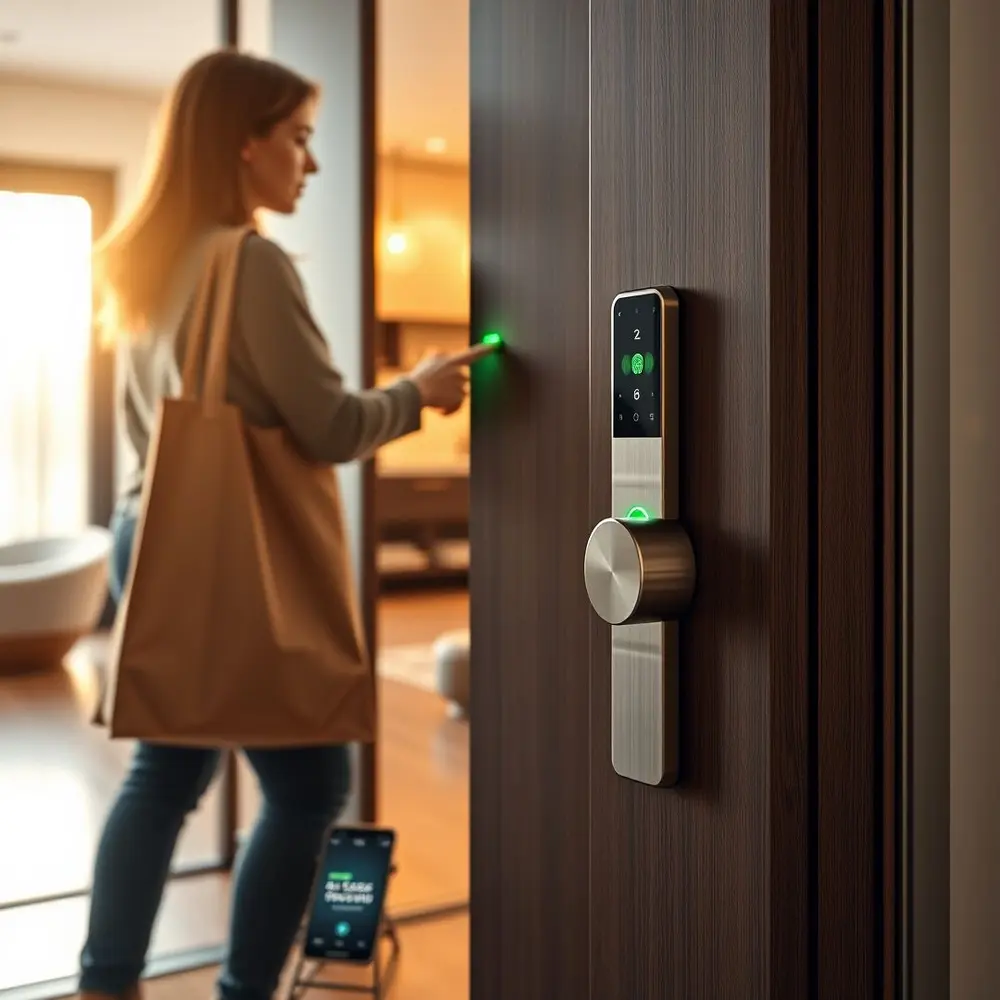
Imagine approaching your door, hands full of groceries, and having it unlock automatically as you arrive. Or granting secure, temporary access to a cleaning service without needing to leave a key under the mat. These scenarios encapsulate the core convenience benefits of smart locks. Features like auto-unlock/lock based on smartphone geofencing, personalized PIN codes, and biometric fingerprint scanners eliminate the daily friction of physical keys. For families, managing access becomes streamlined – no more duplicated keys or worries about forgotten combinations. You can create unique access schedules for different people and revoke permissions instantly from your phone if circumstances change. Vacation rental owners and landlords particularly benefit from the ability to manage access remotely across properties.
Enhanced Security Far Beyond Mechanical Standards
Contrary to some initial skepticism, modern smart locks often offer superior security than many traditional high-security deadbolts. Advanced encryption protocols safeguard communication between the lock, your phone, and the Wi-Fi or Z-Wave/Zigbee hub, typically employing the same robust standards used in online banking. Features like built-in alarm systems detect forced entry attempts or physical tampering, sending immediate alerts to your smartphone. Activity logs provide a detailed, date-stamped record of every lock and unlock event, letting you know precisely who entered your home and when. Furthermore, the absence of an external keyhole removes the vulnerability to lock bumping or picking techniques common with traditional locks. Many leading smart locks are developed with a focus on achieving the highest grades of advanced security systems certification, ensuring rigorous physical and digital resilience.
Deep Integration: The Heart of the Smart Home Ecosystem
In 2025, a smart lock is rarely a standalone device; it’s a vital integrated component within a broader smart home. Seamless compatibility with platforms like Amazon Alexa, Google Assistant, and Apple HomeKit unlocks powerful automations. Your lights can turn on automatically as you unlock the door. Your security system can disarm the moment the lock recognizes your fingerprint. A smart thermostat can adjust to your preferred setting upon entry. Integration with security cameras adds another layer: receive a notification that a code was used, and instantly view the camera feed to confirm who it was. This interconnectedness transforms the entry point into a responsive gateway. Proper setup often benefits from professional integration services to ensure maximum compatibility and seamless functioning within your specific smart home setup.
The real power arises from automated “scenes”. Imagine a “Go to Sleep” routine that, with one voice command or tap, locks all exterior doors, turns off lights, lowers the thermostat, and activates perimeter motion sensors – all coordinated through the smart lock acting as a trigger point.
Addressing Security Concerns: Are Smart Locks Vulnerable?
Understandably, perceived digital vulnerabilities are a major hesitation for potential adopters. Headlines occasionally highlight exploits, often involving early-generation products or user error, rather than fundamental flaws in mature, well-designed modern systems. It’s crucial to differentiate between types of attacks. Potential risks include Wi-Fi signal interception (mitigated by robust encryption and optional hub-based communication protocols that operate on separate low-energy mesh networks), Bluetooth relay attacks (addressed by proximity protocols and subsequent software patches), and physical hacking attempts.
Leading manufacturers have responded proactively. Processor and firmware security has dramatically improved, incorporating regular over-the-air updates to swiftly patch any discovered vulnerabilities. Encryption keys are now stored in secure enclaves within the lock hardware itself, significantly harder to compromise. User authentication relies on multi-factor methods when managing the lock remotely via apps. Crucially, the most secure modern smart locks maintain a mechanical override (using an industry-standard key cylinder or a hidden internal mechanism) as a reliable, low-tech backup. Selecting a lock with cutting-edge encryption and a proven track record of security updates is paramount for peace of mind in 2025.
Game-Changing Innovations Arriving in 2025
The smart lock landscape is far from static. Groundbreaking innovations poised for wider adoption in 2025 promise to redefine security and convenience:
- **Advanced Biometrics:** While fingerprint readers are widespread, expect more sophisticated versions offering near-instantaneous recognition in any weather, alongside increased adoption of iris and even facial recognition integration using low-power 3D sensors similar to smartphones. These biometric indicators are incredibly difficult to forge.
- **Artificial Intelligence (AI) & Anomaly Detection:** AI algorithms are moving beyond basic automation. Smart locks will increasingly learn usage patterns and recognize unusual access attempts – like an unrecognized fingerprint trying multiple codes late at night, or an access code used at an abnormal time – triggering immediate alerts or enhanced security protocols.
- **Unbreakable Quantum Cryptography:** Research into quantum-resistant algorithms is crucial. Hardware using physically unclonable functions (PUFs) and quantum key distribution principles, though currently niche, may start appearing in ultra-high-security models by late 2025, establishing near-unhackable communication.
- **Advanced Materials and Power Systems:** Developments in impact-resistant composites and surface treatments further bolster physical resilience against brute force. Improved, long-life power solutions – such as low-energy Bluetooth standards supplemented by easy-to-replace long-duration batteries or even energy harvesting (using kinetic energy from locking/unlocking movements) – will enhance reliability.
Beyond Security: Sustainability and Practical Advantages
The benefits extend beyond simple access control. Smart locks contribute to a more sustainable lifestyle by eliminating the need for millions of physical keys produced annually, often from non-recyclable materials. The reduction in lockouts drastically cuts down on costly calls to locksmiths, saving both resources and money. For homeowners, the precise activity logs provide invaluable documentation, useful for verifying the comings and goings of contractors, delivery personnel, housekeepers, or tenants. Energy efficiency is another indirect benefit – locks integrated with smart home systems can help regulate HVAC usage by ensuring doors are definitively locked before activating vacation modes or energy-saving temperatures.
Insurance providers increasingly recognize these advantages. Offering discounts for qualified smart lock installation on homeowner’s insurance policies is becoming more common, reflecting the statistically reduced risk profiles associated with monitored, entry-logged systems. The combination of convenience, security, environmental consciousness, and potential financial savings makes a compelling case.
Cost-Benefit Analysis: Is the Upgrade Worth It?
The initial investment for a quality smart lock, ranging roughly from $100 to $400 depending on features and brand, undeniably exceeds the cost of a basic deadbolt or knob set. However, evaluating this purely as a hardware replacement misses the broader value proposition. Consider the tangible savings: drastically reduced locksmith call-out fees (often costing $75-$200+ per incident), potential savings on home insurance premiums (which can offset the cost over time), and saved effort coordinating key handovers. Factor in the substantial intangible benefits: the priceless peace of mind from knowing your home is securely locked and monitored remotely, the daily convenience of keyless entry, and the enhanced control over who accesses your property and when. For rentals, the improved tenant experience and streamlined management represent significant operational savings.
Future-Proofing Your Home for the Digital Age
Integrating a smart lock isn’t just about solving today’s problem – it’s preparing your home for the technology of tomorrow. Smart homes represent a foundational shift in how we interact with our living spaces. Entry management is a fundamental aspect of this shift. Installing a modern, standards-compliant smart lock positions your home to integrate seamlessly with future innovations in home automation, security, and energy management. Platforms and protocols are evolving towards greater interoperability, meaning a well-chosen lock today will likely function cohesively with emerging smart home devices for years to come.
Choosing a reputable brand known for security commitment and long-term software support is vital. Committing to a smart home security assessment is a prudent first step in determining the best smart lock solutions for your specific home layout, security requirements, and existing or planned smart ecosystem.
Conclusion
Upgrading to a smart lock in 2025 is far more than adopting a futuristic gadget; it’s a strategic investment in a safer, more convenient, and intelligently managed home. The era of worry over lost keys, forgotten lockouts, and uncertain security is ending. Driven by relentless innovation, today’s smart locks offer a compelling fusion of robust digital and physical security, unparalleled convenience through keyless access and remote management, and seamless integration within sophisticated smart home ecosystems. While security concerns demand attention, choosing technologically mature devices from reputable vendors effectively mitigates such risks, often providing superior protection against traditional lock exploits. From insurance discounts to daily ease of use and powerful automation capabilities, the benefits are tangible and transformative. As we navigate the digital age of homeownership or management, embracing smart lock technology in 2025 positions you not just with enhanced security and convenience today, but fully prepared for the smarter, more connected homes of tomorrow. Isn’t it time your front door caught up with the future?
 UNV
UNV Dahua
Dahua Hikvision
 Cisco
Cisco Mikrotik
 Dalton smart locks